
Modeling the Mechanisms and Consequences of Credit Shocks, Including Shocks to Deposit Profit Rates and Bank Loan and Credit Interest Rates, and Financial Shocks, Including Asset Price Shocks, Using a Dynamic Stochastic General Equilibrium Model
Keywords:
Credit Shocks, Financial Shocks, DSGE Model, Monetary Policy, Financial Development, Inflation, Economic Growth, IranAbstract
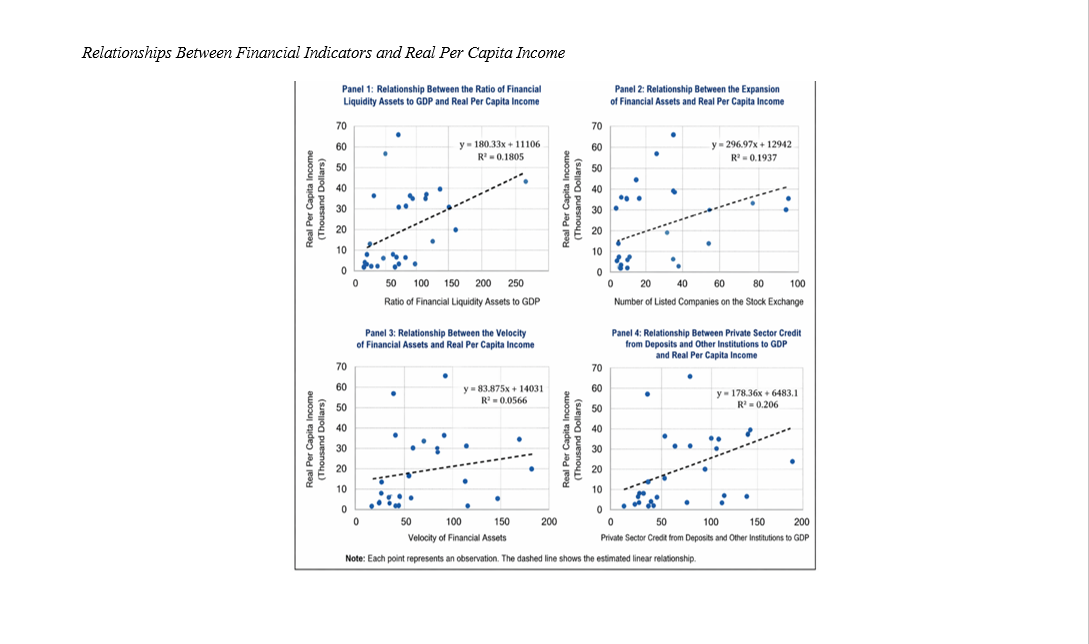
The objective of this study is to investigate the transmission mechanisms and macroeconomic effects of credit shocks (including deposit and lending rate shocks) and financial shocks (including asset price shocks) on key macroeconomic variables in Iran within a dynamic stochastic general equilibrium framework. This study employs a quantitative and analytical approach based on a dynamic stochastic general equilibrium (DSGE) model tailored to the structural characteristics of the Iranian economy. The model incorporates key sectors including households, firms, the banking system, government, and the external sector, allowing for the integration of financial frictions, credit markets, and asset price dynamics. Empirical support is provided through descriptive-comparative analysis across selected countries and time-series analysis for Iran over the study period. Key variables include financial development indicators (such as trading value to GDP, number of listed firms, turnover ratio, bank deposits, private sector credit, and market capitalization), macroeconomic indicators (real GDP, inflation, consumption, investment), and nominal variables (interest rates, exchange rates, liquidity). Bivariate regressions and correlation analyses are used to examine relationships between financial variables and macroeconomic performance. The findings indicate that higher levels of financial development are positively associated with real per capita income and negatively associated with inflation across countries. In Iran, financial market expansion and increased liquidity are positively correlated with consumption, investment, and GDP, while also showing a positive but weaker relationship with inflation. Banking sector development and private sector credit exhibit a positive relationship with real economic performance and an inverse relationship with inflation. Asset price shocks and financial market growth significantly influence macroeconomic variables through wealth, expectations, and financing channels. Additionally, liquidity growth and exchange rate fluctuations are found to be strongly associated with financial market dynamics, indicating the presence of intertwined nominal and real transmission mechanisms. The study concludes that credit and financial shocks play a fundamental role in shaping macroeconomic dynamics in Iran, with both banking and capital market channels jointly influencing economic performance.
References
Batool, Z., Haroon, M., Shah, A. U., Adil, M., & Nisar, M. (2022). Economy-Wide Effects Of Monetary Policy Shocks: Evidence From Pakistan. Harf-o-Sukhan, 6(2), 18-23.
Caballero, J., Fernández, A., & Park, J. (2019). On corporate borrowing, credit spreads and economic activity in emerging economies: An empirical investigation. Journal of International Economics, 118, 160-178. https://doi.org/10.1016/j.jinteco.2018.11.010
Djatche, N. (2025). Unveiling the effects of monetary surprises: Risk-taking and credit supply. Review of Economics and Statistics, 101(3), 500-515. https://doi.org/10.1016/j.iref.2025.104211
Furceri, D., Loungani, P., & Pizzuto, P. (2022). Moving closer? Comparing regional adjustments to shocks in EMU and the United States. Journal of International Money and Finance, 120, 102282. https://doi.org/10.1016/j.jimonfin.2020.102282
Görtz, C., Tsoukalas, J. D., & Zanetti, F. (2022). News shocks under financial frictions. American Economic Journal: Macroeconomics, 14(4), 210-243. https://doi.org/10.1257/mac.20170066
Gutiérrez, E., Jaume, D., & Tobal, M. (2021). Do Credit Supply Shocks Affect Employment in Middle-Income Countries?
Haque, M. E., & Imam, M. O. (2025). Following the crowd: Unveiling the impact of macroeconomic shocks and monetary policy shifts on herding dynamics in the commodity and metals sectors. Economies, 13(11), 306.
Hashemi Dizaj, A., & Nazemfar, R. (2025). The Impact of the Central Bank's Contractionary Monetary Policy on Bank Risk-Taking Based on an Agent-Based Approach. https://ecoj.tabrizu.ac.ir/article_20218.html?lang=en
Hiebert, P., Jaccard, I., & Schüler, Y. (2018). Contrasting financial and business cycles: Stylized facts and candidate explanations. Journal of Financial Stability, 38, 72-80. https://doi.org/10.1016/j.jfs.2018.06.002
Irfan, M., Razzaq, A., Sharif, A., & Yang, X. (2022). Influence mechanism between green finance and green innovation: exploring regional policy intervention effects in China. Technological Forecasting and Social Change, 182, 121882. https://doi.org/10.1016/j.techfore.2022.121882
Jiménez, G., Mian, A., Peydró, J. L., & Saurina, J. (2020). The real effects of the bank lending channel. Journal of Monetary Economics, 115, 162-179. https://doi.org/10.1016/j.jmoneco.2019.06.002
Kapetanios, G., Price, S., & Young, G. (2018). A UK financial conditions index using targeted data reduction: Forecasting and structural identification. Econometrics and statistics, 7, 1-17. https://doi.org/10.1016/j.ecosta.2017.12.002
Kaplan, G., & Violante, G. L. (2018). Microeconomic heterogeneity and macroeconomic shocks. Journal of Economic Perspectives, 32(3), 167-194. https://doi.org/10.1257/jep.32.3.167
Mehrotra, N., & Sergeyev, D. (2021). Financial shocks, firm credit and the Great Recession. Journal of Monetary Economics, 117, 296-315. https://doi.org/10.1016/j.jmoneco.2020.01.008
Moizz, A., & Akhtar, S. (2024). Dynamic Linkages Between the Monetary Policy Variables and Stock Market in the Presence of Structural Breaks: Evidence From India. Asian Journal of Economics and Banking, 8(3), 391-411. https://doi.org/10.1108/ajeb-01-2024-0005
Moradlu, M. (2024). Factors Influencing Monetary and Banking Economics in Iran. Tenth International Conference on Management Sciences and Accounting, Tehran.
Olajide, O. O., & Temidayo, A. (2022). Further insights on monetary transmission mechanism in Nigeria. Journal of Economics and International Finance, 14(2), 11-22. https://doi.org/10.5897/JEIF2020.1037
Pezeshki, M. R., Damenkeshideh, M., & Esmailniaketabi, A. A. (2025). Financial Stability, Monetary Policy Uncertainty, and the Country's Economic Activities. Quarterly Journal of Financial Economics, 18(69), 1-28.
Pourhashemi, A., & Yousefi, N. (2024). The Impact of Oil Price Volatility and Monetary Policies on Unemployment in Oil-Exporting Countries of the Middle East Region. Journal of Economic Research and Middle East Development, 13(1), 99-113.
Rincey, B. A., & Sunita, K. (2024). The Role of Monetary Incentives for Enhancing Employee Performance With Special Reference to Selected Financial Institutions in the Bhilai Region. International Journal for Multidisciplinary Research, 6(2). https://doi.org/10.36948/ijfmr.2024.v06i02.14693
Rodnyansky, A., & Darmouni, O. M. (2017). The effects of quantitative easing on bank lending behavior. The Review of Financial Studies, 30(11), 3858-3887. https://doi.org/10.1093/rfs/hhx063
Saeedi, A., Fallahi, M., & Esmaeilpour Moghadam, H. (2025). The Impact of Uncertainty from Monetary and Exchange Rate Policies on Financial Stability: A Markov Regime-Switching Approach in Iran's Economy. Monetary and Financial Economics. https://doi.org/10.22067/mfe.2025.93017.1537
Sotoudehnia Karani, S., & Shafi'zad Abkenar, B. (2025). An Investigation of the Effect of Uncertainty on Economic Growth and Monetary Policies in Iran. Economic Growth and Development Research. https://doi.org/10.30473/egdr.2025.73885.6971
Yousfani, K., Iftikhar, H., Rodrigues, P. C., Armas, E. A. T., & López-Gonzales, J. L. (2025). Global Shocks and Local Fragilities: A Financial Stress Index Approach to Pakistan's Monetary and Asset Market Dynamics. Economies, 13(8), 243. https://doi.org/10.3390/economies13080243
Downloads
Publication Timeline
- Submitted
- Revised
- Accepted
Issue
Section
License
Copyright (c) 2026 Mohammad Ranjbari, Hossein Izadi, Hossein Jahangirnia, Majid Zanjirdar (Author)

This work is licensed under a Creative Commons Attribution-NonCommercial 4.0 International License.