
Analysis of Social and Cultural Factors Affecting the Development of Tourism Culture in Iran: A Case Study of Border Regions
DOI:
https://doi.org/10.61838/kman.jrmde.253Keywords:
Tourism culture development, social factors, cultural factors, sustainable tourismAbstract
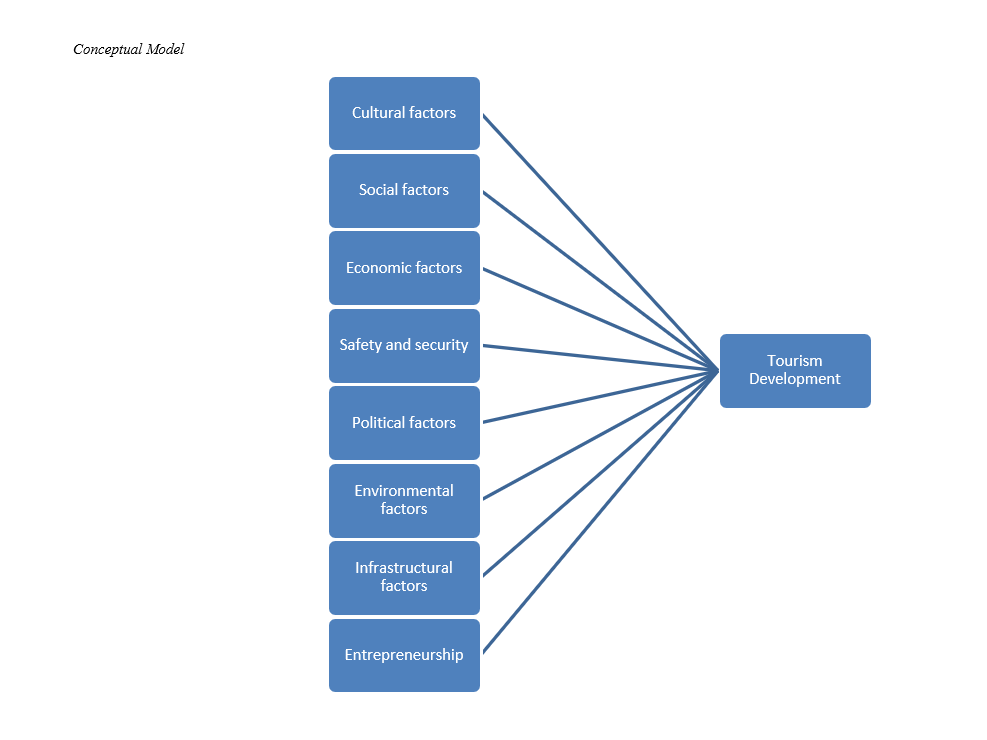
This study aimed to identify and analyze the social and cultural factors affecting the development of tourism culture in Iran and to prioritize these factors. The primary objective was to explain the existing paradox between Iran’s vast potential tourism capacities and the weak practical performance of this industry. The study adopted a mixed-methods (integrative) research design. In the quantitative phase, the research was conducted using a descriptive–survey method with a correlational approach. The statistical population consisted of all tourists visiting the border city of Bazargan (over 100,000 individuals). Based on the Morgan table, a sample size of 384 participants was determined and selected through simple random sampling. The data collection instrument was a researcher-developed questionnaire comprising 52 items, whose validity was confirmed using the content validity ratio method (CVR = 0.851) and whose reliability was verified using Cronbach’s alpha coefficient (ranging from 0.761 to 0.931 across components). Data were analyzed using SPSS software through descriptive and inferential statistics, including Pearson correlation and multiple linear regression analyses. The results of the regression analysis indicated that the model consisting of eight independent variables (cultural, social, economic, political, environmental, infrastructural, entrepreneurial, and security-related factors) explained a total of 52.7% of the variance in the dependent variable (tourism propensity) (R² = 0.527). Among these factors, five showed positive and statistically significant effects: cultural factors with a beta coefficient of 0.414 (the strongest predictor), political factors (0.220), safety and security (0.404), economic factors (0.172), and social factors (0.174). The three factors of environmental, infrastructural, and entrepreneurial dimensions were not statistically significant.
References
Alvani, S. M., & Pirouzbakh, M. (2006). The Process of Tourism Management. Cultural Research Office. https://www.gisoom.com/book/1359748/
Ashourzadeh, M., & Noori, A. (2024). Investigating the Impact of Service Quality on Attracting Tourists and Their Loyalty (Case Study: Five-Star Hotel Tourists in Mashhad). Tourism Research and Sustainable Development, 28, 33-46. https://civilica.com/doc/2231827/
Babb, F. E. (2011). The tourism encounter: Fashioning Latin American nations and histories. Stanford University Press. https://doi.org/10.1515/9780804775601
Bano, S., Liu, L., & Khan, A. (2022). Dynamic influence of aging, industrial innovations, and ICT on tourism development and renewable energy consumption in BRICS economies. Renewable Energy, 192, 431-442. https://doi.org/10.1016/j.renene.2022.04.134
Briones, J., Tejeida, A., Ricardo, P., & Morales, M. (2009). Toward the evolution of the tourism's conceptual system. http://journals.isss.org/index.php/proceedings52nd/article/view/1232
Enahari, N. S. (2024). The Impact of Instagram on Attracting Tourists with Emphasis on Socio-Cultural Factors (Case Study: Hormuz Island). Seventh International Conference on Management, Tourism, and Technology. https://civilica.com/doc/1936872/
Gannon, M., Rasoolimanesh, S. M., & Taheri, B. (2021). Assessing the mediating role of residents' perceptions toward tourism development. Journal of Travel Research, 60(1), 149-171. https://doi.org/10.1177/0047287519890926
Getz, D. (1986). Models of tourism planning: Toward integration of theory and practice. Tourism Management, 7(1), 21-32. https://doi.org/10.1016/0261-5177(86)90054-3
Gillovic, B., & McIntosh, A. (2020). Accessibility and inclusive tourism development: Current state and future agenda. Sustainability, 12(22), 9722-9722. https://doi.org/10.3390/su12229722
Gunn, C. A. (2002). Tourism planning: Concepts, basics, cases. Routledge. https://www.routledge.com/Tourism-Planning-Basics-Concepts-Cases/Var-Gunn/p/book/9780415932691
Haj Ali Akbari, F., Mousavi, N., & Doroudi, H. (2022). Analyzing the Role of Social and Cultural Factors in the Development of Ecotourism in Zanjan County. Quarterly Journal of Urban Tourism, 9(1), 33-47. https://jut.ut.ac.ir/article_87225.html?lang=en
Hall, C. M., & Page, S. J. (2020). The geography of tourism and recreation: Environment, place and space. Routledge. https://www.routledge.com/The-Geography-of-Tourism-and-Recreation-Environment-Place-and-Space/Hall-Page/p/book/9780415833998
Holden, A. (2000). Environment and tourism. Routledge. https://doi.org/10.4324/9780203991930
Jabari, G., & Jafari Haftkhan, N. (2024). Exploring Factors Affecting Intercultural Communications in Tourism Among Tourists (Case Study: Hamadan City). Social Studies in Tourism, 12(1), 129-152. https://www.journalitor.ir/?_action=article&au=3070609&_au=%D9%86%D8%A7%D8%AF%D8%B1%20%20%D8%AC%D8%B9%D9%81%D8%B1%DB%8C%20%D9%87%D9%81%D8%AA%D8%AE%D9%88%D8%A7%D9%86%DB%8C
Javan, F., & Mohammadi, M. (2025). Explaining Factors Affecting Memorial Tourism Development in Iran. Social Studies in Tourism, 13(29), 27-52. https://www.journalitor.ir/article_725358.html
Kazemi, M. (2006). Tourism Management. Samt Publishing. https://samt.ac.ir/fa/book/1162/
Leiper, N. (1990). Tourism systems: An interdisciplinary perspective. Massey University. https://www.ucipfg.com/Repositorio/MGTS/MGTS15/MGTSV15-01/SEMANA3/TourismSystemsanInterdisciplinaryPerspective.pdf
Leiper, N. (2004). Tourism management. Pearson Education Australia. https://archive.org/details/tourismmanagemen0000leip_k7c9
León-Gómez, A., Ruiz-Palomo, D., Fernández-Gámez, M. A., & García-Revilla, M. R. (2021). Sustainable tourism development and economic growth: A bibliometric review and analysis. Sustainability, 13(4), 2270-2270. https://doi.org/10.3390/su13042270
Liu, C., Dou, X., Li, J., & Cai, L. A. (2020). Analyzing government role in rural tourism development: An empirical investigation from China. Journal of Rural Studies, 79, 177-188. https://doi.org/10.1016/j.jrurstud.2020.08.046
Mahmoudi Darani, S., Rahimian Asl, M., Maleki, M. H., & Nili Ahmad Abadi, M. (2024). Providing a Framework to Increase Foreign Tourists' Desire to Travel to Iran with Emphasis on Soft Power. Social Studies in Tourism, 12(1), 153-182. https://www.sid.ir/paper/1385344/fa
Makhsous, M., Najafizadeh, N. A., & Janmard, H. (2021). Explaining a Model for Tourism Development Emphasizing the Role of Cultural-Social Drivers (Case Study: Arak City). Quarterly Journal of Urban Tourism, 8(3), 47-62. https://jut.ut.ac.ir/article_84125.html?lang=en
Mandani Pour, Y., & Heydari, A. A. (2024). The Role of Urban Elements and Symbols in Urban Tourism Development. Environmental Sciences and Geography Knowledge, 9(1), 190-199. https://www.geo2.ir/article_199921.html
Mogharpak, A., & Ghorbani, F. (2018). The Role of Tourism in National Security and the Development Process of Countries (Case Study: Iran). Geographical Space of Tourism, 7(26), 1-25. https://sanad.iau.ir/Journal/gjts/Article/999201/FullText
Mubinovna, R. F. (2020). Investment as a factor of regional tourism development. South Asian Journal of Marketing & Management Research, 10(10), 71-76. https://journal2.um.ac.id/index.php/JESP/article/download/37073/11381
Mwesiumo, D., Halfdanarson, J., & Shlopak, M. (2022). Navigating the early stages of a large sustainability-oriented rural tourism development project: Lessons from Træna, Norway. Tourism Management, 89, 104456. https://doi.org/10.1016/j.tourman.2021.104456
Rej, S., Bandyopadhyay, A., Murshed, M., Mahmood, H., & Razzaq, A. (2022). Pathways to decarbonization in India: The role of environmentally friendly tourism development. Environmental Science and Pollution Research, 29, 1-22. https://doi.org/10.1007/s11356-022-19239-2
Ridderstaat, J., Fu, X., & Lin, B. (2022). A framework for understanding the nexus between tourism development and poverty: Application to Honduras. Tourism Management, 93, 104620. https://doi.org/10.1016/j.tourman.2022.104620
Saqelani, S. (2024). Proposing Solutions to Preserve Local Architecture and Meet Tourism Needs by Creating a Tourist and Recreational Accommodation in the Desert Area. Green Architecture, 43, 119-130. https://civilica.com/doc/2234920/
Saqelani, S. (2025). Determining Solutions and Policies Based on Strategies for Designing Tourist and Recreational Accommodation and Their Economic and Physical Impacts, as well as Factors Influencing Tourist Attraction in the Desert Region of Isfahan Province. Green Architecture, 46, 107-120. https://civilica.com/doc/2352999/
Sharpley, R. (2018). Tourism, tourists and society. Routledge. https://www.routledge.com/Tourism-Tourists-and-Society/Sharpley/p/book/9781138629493
Streimikiene, D., Svagzdiene, B., Jasinskas, E., & Simanavicius, A. (2021). Sustainable tourism development and competitiveness: A systematic literature review. Sustainable Development, 29(1), 259-271. https://doi.org/10.1002/sd.2133
Tosun, C., Dedeoğlu, B. B., Çalışkan, C., & Karakuş, Y. (2021). Role of place image in support for tourism development: The mediating role of multidimensional impacts. International Journal of Tourism Research, 23(3), 268-286. https://doi.org/10.1002/jtr.2405
Urry, J., & Larsen, J. (2011). The tourist gaze 3.0. SAGE Publications. https://doi.org/10.4135/9781446251904
Varnajot, A., & Saarinen, J. (2021). After glaciers: Towards post-Arctic tourism. Annals of Tourism Research, 63(5), 832-837. https://doi.org/10.1016/j.annals.2021.103205
Wang, R., Dai, M., Ou, Y., & Ma, X. (2021). Residents' happiness of life in rural tourism development. Journal of Destination Marketing & Management, 20, 100612-100612. https://doi.org/10.1016/j.jdmm.2021.100612
Williams, E. (2009). Tourism Geography. Payame Noor University. https://doi.org/10.4324/9780203877555
Wu, T. P., Wu, H. C., Ye, G., Wu, X., & Pan, B. (2022). The contribution of international tourism development to economic growth in the Chinese economy. Journal of Policy Research in Tourism, Leisure and Events, 14(3), 1-15. https://www.researchgate.net/publication/361386912_The_contribution_of_international_tourism_development_to_economic_growth_in_Chinese_economy
Yuniarti, M. S., Syamsuddin, M. L., Efendi, H. M. F., Wulandari, A., & Suhanda, D. (2022). Implementation of tourism development policy in Geopark Ciletuh-Pelabuhanratu, West Java, Indonesia. The Institute of Biopaleogeography Named under Charles R. Darwin, 11, 1-63. http://psjd.icm.edu.pl/psjd/element/bwmeta1.element.psjd-41b03a4e-f901-4b2f-9c75-9e8e32b8d6b9/c/IBPG_11__2022__1-63.pdf
Zarei, R. (2025). Examining the Relationship Between Social Capital and Sustainable Rural Tourism Development in Tourist Destinations. Social Studies in Tourism, 13(29), 1-26. https://www.journalitor.ir/article_725357.html
Zhang, J. (2021). Impacts of emissions policies on tourism: An important but neglected aspect of sustainable tourism. Journal of Hospitality and Tourism Management, 63(2), 402-410. https://doi.org/10.1016/j.jhtm.2021.02.006
Downloads
Publication Timeline
- Submitted
- Revised
- Accepted
Issue
Section
License
Copyright (c) 2026 Alireza Pariro (Author); Khalil Mirzaei; Zahra Ghasemi (Author)

This work is licensed under a Creative Commons Attribution-NonCommercial 4.0 International License.